
 CLIMATE at HOME
Water heating. Features and history of development....
Aerated concrete blocks....
Chiliers. Features of using chillers....
Microclimate and comfort of the mansard premises....
Some features of the cellar ventilation....
Wood's magic....
Ventilation and appetite....
Wallpaper - everything is brilliant - it's simple....
Ceiling fans....
Modern trends in residential ventilation.
Ventilation of residential buildings in our time has essentially retained the principles that have been basic for the past few centuries. These principles consist in removing waste products from the kitchen and bathrooms, wardrobes, etc. and replacing them, that is, supplying fresh air to people's resting places - living rooms, offices, bedrooms.
Over time, only the methods of implementing the removal of exhaust air and the supply of fresh air have changed. Until recently, literally a few decades ago, ventilation was completely implemented naturally, exhaust - due to the difference in pressure/temperatures outside and inside, and inflow - due to the infiltration of fresh air through leaks in windows and doors.
However, due to the increase in heating costs, the development of construction technologies and, as a result, the maximum sealing and insulation of residential buildings, the natural method of ventilating the premises of the house has become virtually impossible.
Therefore, ventilation of residential buildings today is carried out either completely mechanically, using fans, or combined - forced exhaust, natural inflow (theoretically, it can be the other way around).
The combined method involves either opening windows in micro-ventilation mode, or installing ventilators in window structures, or completely ventilating the premises by opening windows. This creates some discomfort due to possible drafts and blowing, additional load on the heating system of the house, especially in the winter and transitional seasons. In addition, with intensive moisture and harmful emissions, the efficiency of this ventilation method is quite low. Although from the point of view of the cost of implementation, it is certainly the most budgetary.
With the mechanical method of ventilation, both the exhaust and supply are carried out by fans, in addition, the supply air must be heated to the temperature in the room. Hence the trend in the use of forced ventilation equipment - supply and exhaust units with a recuperator. The recuperator ensures the transfer of heat from the exhaust air to the supply air, minimizing the costs of its reheating.
A relatively budgetary option for this ventilation method are wall recuperators. The disadvantage of wall recuperators is the creation of discomfort from the air flow and low efficiency with a greater intensity of heat and moisture emissions. In addition, they are vulnerable when using other powerful exhaust equipment in the building, for example, a kitchen hood.
Recently, suspended or floor-mounted supply and exhaust units with recuperators of various types have been increasingly used for ventilation of residential buildings. This requires considerable costs for equipment and installation of air ducts, additional space in the false ceiling. 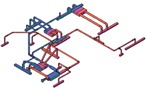 However, in combination with the use of slot or other concealed diffusers, duct air conditioners, this provides incredible opportunities for design, creating an ideal microclimate in the premises of the house without drafts, without additional load on the heating system with minimal operating costs.
This is actually a trend in the arrangement of ventilation in modern residential buildings. Manufacturers are improving the energy efficiency of recuperators, fans, various innovations are being introduced in this sector, which is gradually reducing the cost of this equipment.
| Contact Privacy Policy © 2011-2026 |
Ventilation Condition Heating    |